Construction projects can run for months or even years, making reliable long-term camera power an important consideration.
While mains electricity may be available later in a project, it is often unavailable during early site works or in locations where running permanent power to a camera would be difficult or expensive.
A solar powered construction time lapse camera provides an effective alternative.
Construction Time Lapse Specialists provides solar-powered camera systems designed specifically for long-term construction monitoring across Brisbane, the Gold Coast and throughout Queensland.
These systems can operate independently of site power while capturing high-resolution images and transmitting them remotely to an online portal.
Why Use Solar Power for Construction Time-Lapse Cameras?
One of the biggest advantages of solar power is flexibility.
A construction time-lapse camera needs to be positioned where it provides the best view of the project, not simply where an electrical outlet happens to be available.
Using solar power allows cameras to be installed in suitable locations around a construction site without relying on permanent mains electricity.
This can be particularly useful for:
- greenfield construction projects;
- civil infrastructure projects;
- road and rail projects;
- large industrial developments;
- early construction works;
- remote construction sites; and
- projects where mains power is not available near the preferred camera position.
Once installed, the camera can continue documenting the project as construction progresses.
How Does a Solar Time-Lapse Camera Work?
A professional solar time-lapse system combines several technologies.
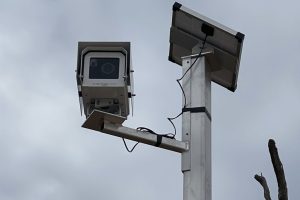
The system typically includes a high-resolution camera, solar panel, rechargeable battery system, weather-resistant enclosure, communications hardware and remote camera-management technology.
During daylight hours, the solar panel generates energy which is used to charge the system’s batteries.
Stored battery power allows the camera and communications equipment to continue operating when solar energy isn’t available.
A properly designed system therefore doesn’t need continuous sunshine to function.
This is particularly important for long-term installations that need to operate through changing weather conditions.
High-Resolution Photography Rather Than CCTV Footage
There is an important distinction between a construction time-lapse camera and a conventional solar security camera.
Security cameras are primarily designed for surveillance.
Construction time-lapse cameras are designed to create a high-quality photographic record of a project over time.
The construction camera systems developed by MotionLapse use DSLR camera technology capable of producing high-resolution images suitable for long-term project documentation and professional time-lapse production.
High-resolution source images become particularly important when a project lasting one or two years is eventually turned into a finished time-lapse video.
Remote 4G and 5G Connectivity
Generating electricity is only one part of a remote camera system.
The images also need to get from the construction site to the people who need to see them.
Modern construction camera systems can use mobile data connectivity to automatically transmit images from the site.
This means a project manager doesn’t need to physically visit the camera and retrieve memory cards.
Instead, images can be uploaded to an online portal where authorised users can access them remotely.
For project teams managing several construction sites, this provides a convenient way of checking progress from the office, home or while travelling.
Monitor Construction Progress Remotely
A solar-powered time-lapse camera effectively becomes a long-term visual monitoring point overlooking the project.
Depending on the camera configuration, photographs can be captured throughout the working day and uploaded automatically.
Project managers can then review recent images and compare them with photographs captured previously.
For example, you might compare today’s site with:
Yesterday → Last week → Last month → Major project milestone
This makes changes to the construction site easy to see.
Instead of relying entirely on written descriptions, project teams have a visual record showing how the site has developed.
Solar Power Helps With Camera Positioning
Camera position can have a major impact on the quality of the finished time-lapse.
Ideally, the camera should provide a clear view of the construction area while minimising the likelihood that future structures, machinery or temporary site facilities will block the view.
If mains power is required, positioning options can become more limited.
Solar operation gives greater flexibility to position the camera based primarily on view, orientation and long-term visibility.
Construction Time Lapse Specialists can assess the proposed camera location before installation and determine an appropriate mounting position.
For long-term projects, this planning is important because the camera may remain in the same location for 12, 18, 24 months or longer.
Built for Long-Term Outdoor Installation
Construction sites are challenging environments for electronic equipment.
Cameras may be exposed to:
- rain;
- dust;
- high temperatures;
- direct sunlight;
- wind;
- vibration; and
- changing seasonal conditions.
A professional construction time-lapse system therefore needs more than simply a camera attached to a solar panel.
The camera, communications equipment, battery and associated electronics need to be protected appropriately for long-term outdoor use.
MotionLapse designs time-lapse systems specifically for these types of long-term applications, including weather-resistant enclosures and remote connectivity.
Solar Time-Lapse Cameras for Civil and Infrastructure Projects
Solar-powered systems are particularly useful on large civil and infrastructure projects.
These sites can cover substantial areas, and permanent power may not be available near the ideal camera location.
Applications can include:
road construction, bridges, rail projects, earthworks, water infrastructure, industrial developments and large commercial construction sites.
Multiple cameras can also be used when a single camera cannot adequately cover the entire project.
This provides project teams with different perspectives of construction activity.
Combine Time-Lapse Cameras With Drone Photography
A fixed solar camera provides something a drone cannot: continuous documentation from exactly the same position over a long period.
A drone provides something a fixed camera cannot: the ability to photograph the project from multiple aerial positions.
Using both can create a much more comprehensive visual record.
For example, the time-lapse camera might photograph the site every working day while a drone flight is conducted fortnightly or monthly.
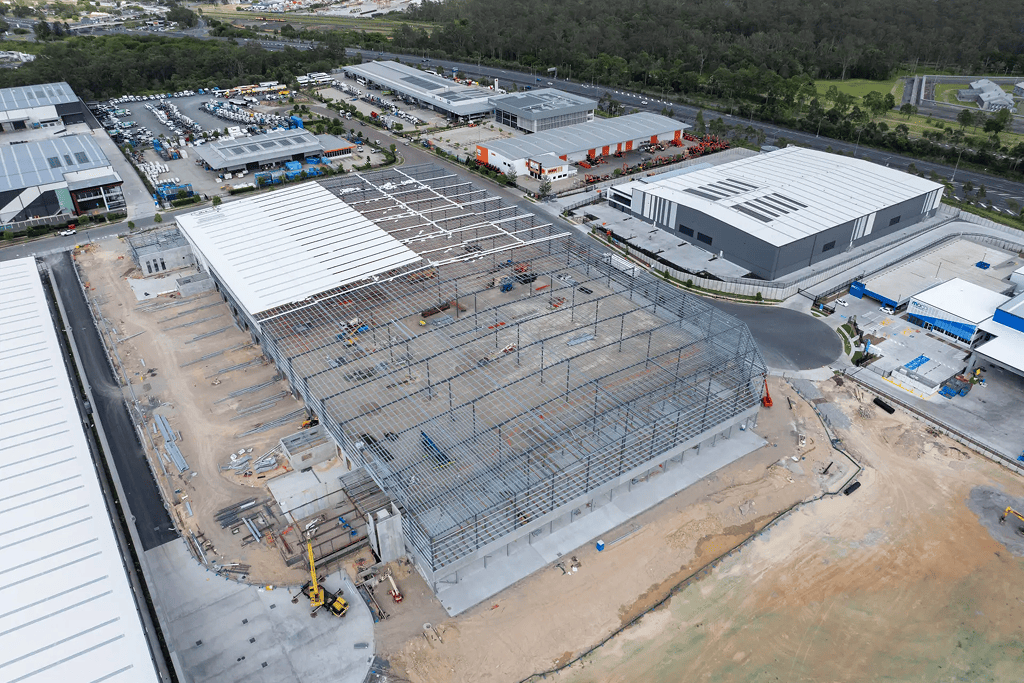
The resulting aerial photographs can show the overall site layout, earthworks and construction progress from above.
Droneworxs Aerial Photography provides commercial drone photography that can be combined with construction time-lapse monitoring for projects throughout Brisbane and Queensland.
This combination gives project teams both continuous fixed-camera imagery and high-quality aerial progress photography.
Create a Complete Record of the Construction Project
The value of a solar-powered time-lapse camera extends beyond monitoring the project while construction is underway.
Over the life of a project, thousands of photographs can create a detailed chronological record of construction.
These images can subsequently be used for:
- client progress reports;
- stakeholder presentations;
- project websites;
- social media;
- company marketing;
- tender submissions;
- project case studies; and
- final construction time-lapse videos.
At project completion, selected images can be transformed into a professionally edited video showing months or years of construction in just a few minutes.
Solar-Powered Construction Cameras Across Brisbane and Queensland
Construction Time Lapse Specialists provides long-term camera systems for commercial construction, civil works and major infrastructure projects.
Solar power, remote communications and high-resolution photography allow cameras to operate independently while providing project teams with ongoing visual access to their sites.
For larger projects, the service can also be combined with ground photography and professional drone photography to provide more comprehensive visual documentation.
Get a Time-Lapse Camera Quote for Your Project
Planning a construction project in Brisbane, the Gold Coast or elsewhere in Queensland?
Construction Time Lapse Specialists can assess your project requirements, recommend suitable camera locations and provide a solar-powered time-lapse monitoring solution designed for the duration of your build.
Whether you require one camera for a commercial development or multiple cameras across a major infrastructure project, we can provide long-term visual documentation from installation through to project completion.
From the ground to the sky — we capture your entire construction journey.
Contact Construction Time Lapse Specialists today to discuss your project and request a time-lapse camera quote.