
Key Takeaways
Effective infrastructure project monitoring connects clear objectives with dependable evidence and timely decisions.
- Set measurable baselines for scope, time, cost and quality.
- Give each reporting task an owner and define escalation thresholds.
- Combine site observations, contractor information and visual records.
- Use dashboards and field technology to identify exceptions early.
- Treat monitoring as a continuing management process, not a monthly paperwork exercise.
Define the foundations of an effective monitoring framework
A monitoring framework should explain what will be measured, how evidence will be collected and who will act on the results. It needs to work for the project team, the client and other parties with approval, assurance or reporting responsibilities. The most useful frameworks are agreed before delivery pressure makes consistent reporting difficult. This practical monitoring guide provides a useful reference for connecting objectives, baselines, responsibilities and escalation thresholds.
Set measurable project objectives and success criteria
Begin with the outcomes the project must achieve, then translate them into measures that can be checked during delivery. A broad aim such as “complete the upgrade successfully” is not sufficient on its own; the team needs defined milestones, approved scope, cost limits, quality requirements and relevant safety or environmental expectations. Each measure should have a baseline, a review frequency and a clear source of evidence.
Good criteria also distinguish activity from achievement. The number of inspections completed, for example, is an activity measure, while the resolution of identified defects may say more about performance. Use a small set of meaningful indicators so that reporting supports judgement rather than creating a large volume of data with little practical value.
Establish roles, reporting responsibilities and escalation paths
Monitoring becomes unreliable when everyone is assumed to be responsible for it. Assign ownership for collecting site information, checking contractor submissions, updating registers, reviewing exceptions and issuing reports. The project control structure should also state who can accept a variance, who must be notified and when an issue moves from site management to senior governance.
Reporting responsibilities should match the authority available to each role. A supervisor may record an emerging constraint, while a project manager may approve a recovery action and a client representative may need to decide on scope or funding. Written escalation paths reduce hesitation when a problem is still small enough to manage.
Align monitoring with project phases and delivery contracts
The information needed during design, procurement, construction, commissioning and handover is different. Early monitoring may focus on approvals, design maturity and procurement readiness; later reporting may concentrate on physical progress, testing, defects and completion evidence. The framework should change with the work, without losing continuity in the core baselines.
Contract requirements matter just as much. Align reporting dates, accepted evidence, notice periods and variation records with the delivery contract. This makes monitoring useful for management while also preserving a clear record when scope, time or price is disputed.
Choose the right infrastructure project monitoring metrics
Metrics should help the team understand whether the project is moving towards its agreed outcomes. A balanced set usually covers schedule, cost, quality, safety, environment, community impacts and commercial exposure. Too few measures can hide a developing problem, while too many can bury the important signal. Select indicators that can be updated consistently and discussed at the right level.
Track schedule progress against the approved baseline
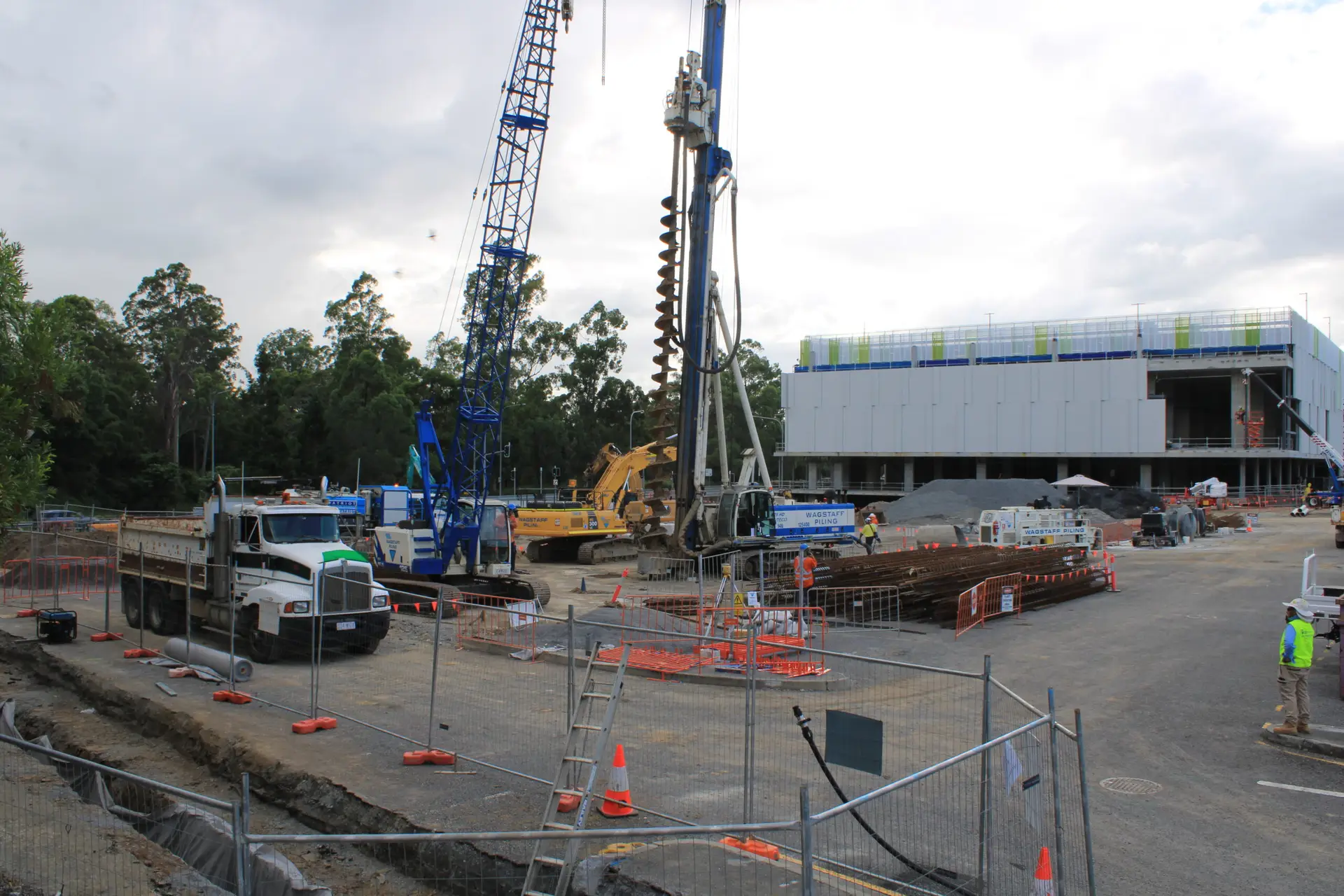
Schedule monitoring should compare actual physical progress with the approved programme, not simply count tasks marked complete. Define measurable activities, milestones and quantities, then record the evidence supporting each reported percentage. This helps distinguish genuine progress from work that has started but is not yet sufficiently complete to support the next activity.
Review critical path effects, float, dependencies and forecast completion dates together. A minor delay may have little consequence in one part of the programme but become significant when it affects access, approvals, commissioning or another contractor. Consistent progress criteria make this analysis more defensible.
Monitor costs, commitments, forecasts and variations
Cost control needs more than a comparison between invoices and the original budget. Track approved budget, committed costs, actual expenditure, remaining commitments, forecast cost to complete and likely variations. The relationship between these figures provides an early view of whether the final cost is moving away from the approved position.
The following structure keeps financial reporting connected to management action:
| Measure | What it shows | Management use |
|---|---|---|
| Approved budget | Authorised cost position | Establishes the financial baseline |
| Committed cost | Contracted or ordered exposure | Shows obligations not yet invoiced |
| Actual cost | Recorded expenditure | Confirms what has been spent |
| Forecast at completion | Expected final cost | Tests whether recovery or approval is needed |
A forecast should be updated when scope, productivity, market conditions or delivery assumptions change. Recording the reason for each material movement helps decision-makers separate a temporary timing difference from a genuine cost pressure.
Measure quality, safety, environmental and community outcomes
Cost and schedule figures do not describe the whole project. Monitor inspection findings, non-conformances, testing status, incidents, corrective actions, environmental controls and community complaints where they are relevant to the work. Indicators should reflect the project’s actual risks rather than being selected simply because they are easy to count.
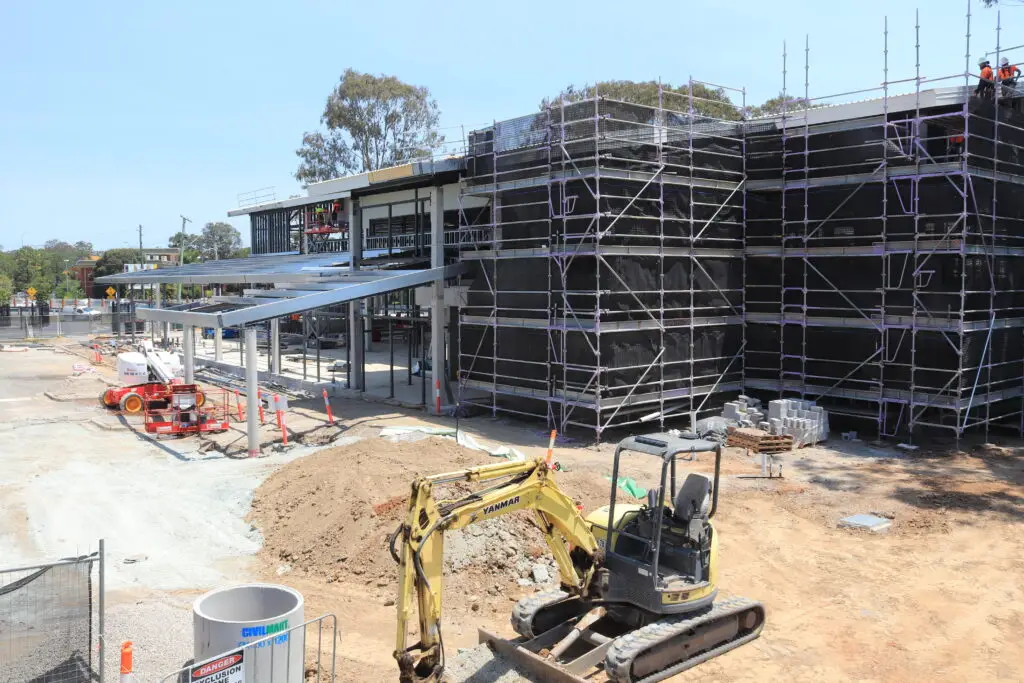
Visual evidence can support these measures, particularly when site conditions change between visits. Construction Time Lapse Specialists provides time lapse camera solutions, drone imaging and high-resolution photography for visual monitoring, giving project teams another record to use alongside formal inspections and reports. The evidence does not replace professional verification, but it can improve the context around progress and site conditions.
Build a reliable system for collecting project data
Decisions are only as reliable as the information behind them. A useful collection system brings together observations from the field, contractor submissions, drawings, approvals, photographs, registers and commercial records. It should make the source and date of each important item clear. This documentation guidance is particularly relevant where version control, permissions and closeout records need to remain orderly.
Combine site inspections, contractor reports and documentation
Site inspections provide direct observations, while contractor reports explain planned work, achieved progress, constraints and upcoming activities. Neither source is complete in isolation. Compare the two, then check them against approved drawings, inspection records, requests for information, test results and other project documentation.
A consistent inspection routine should record location, date, participants, observed condition, action owner and due date. Contractor reports should use agreed definitions and reporting periods. Where accounts differ, retain both the original submission and the resolution so that the final record shows how the position was assessed.
Use digital forms, geospatial data and photographic evidence
Digital forms can improve the speed and consistency of field collection when their questions match the work being inspected. Location fields, controlled response options and required evidence reduce ambiguity. Geospatial references are useful for linear infrastructure and dispersed assets because they connect an observation to a specific place rather than a general project label.
Photographs are most useful when they are dated, located and linked to a clear purpose. A sequence from the same viewpoint may show change over time, while a close image can support a defect or safety observation. Store the original evidence and avoid treating an attractive progress image as a substitute for a complete inspection record.
Set data standards for accuracy, consistency and auditability
Before collection begins, agree naming conventions, units, status definitions, file formats, revision controls and approval rules. A common definition of “complete” is especially important when several contractors report into one programme. Data owners should also know how corrections are made without erasing the original entry.
Auditability depends on more than keeping files. The record should show who entered or changed information, when it happened, what evidence supported it and which version was used in a decision. These standards may feel administrative at first, but they save time when a forecast, payment, claim or handover question needs to be reviewed later.
Use technology to improve field visibility
Technology is useful when it shortens the distance between what is happening on site and what decision-makers can see. It should support a defined monitoring purpose, not become an additional stream of disconnected data. Start with the visibility gap, then choose the simplest tool that can close it. Clear ownership and review routines remain necessary even when collection is automated.
Apply dashboards to identify trends and exceptions
A dashboard should make movement and exceptions easier to see than a folder of reports. Show baseline versus actual performance, current forecast, open actions, risk exposure and the age of unresolved issues. Use consistent definitions and display only the information needed for the audience using the dashboard.
Trend views are often more valuable than a single status colour. Several small weekly movements in productivity, defects or approvals may deserve attention before a formal threshold is breached. Every alert should lead to an owner, a due date and a documented response rather than becoming background noise.
Use drones, sensors and digital twins where they add value
Drones, sensors and digital representations can provide useful evidence when access is difficult, work is dispersed or conditions change quickly. Their value depends on the question being answered, the accuracy required and the process for checking the output. A new capture method should not be adopted merely because it produces more information.
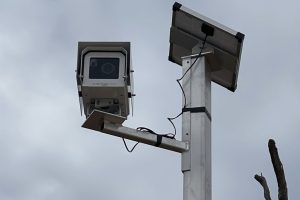
Construction Time Lapse Specialists combines 4K cameras, drone imaging and high-resolution photography within its visual monitoring services. Those tools can complement conventional site records by creating a durable visual record for progress reporting and communication. Define capture locations, frequency, permissions and storage before installation so the output remains useful throughout the project.
Connect monitoring tools with project management systems
Field records should flow into the systems used for programme, cost, quality and risk management wherever practical. This reduces duplicate entry and makes it easier to trace a reported issue from its original observation through to closure. Integration also requires agreed identifiers, data ownership and rules for resolving conflicting information.
Do not assume that connection alone creates insight. Test the workflow with a small number of activities, confirm that users can find the evidence they need and check that updates reach the correct report. A simple reliable exchange is preferable to an elaborate integration that teams cannot maintain.
Identify and manage risks before they affect delivery
Monitoring should reveal uncertainty early enough for the team to influence it. Risks may arise from design development, approvals, access, interfaces, supply, productivity, safety or changing community expectations. They should be linked to measurable indicators and reviewed at a frequency suited to their potential impact. This turns the risk register into a working management tool rather than a static meeting document.
Create a live risk and issue register
A risk describes a possible future event, while an issue is already affecting the project. Keep both visible, with a clear description, cause, consequence, owner, response, target date and current status. Link each significant item to the relevant programme activity, cost exposure, contract obligation or quality requirement.
A practical review should remove closed items from active attention without deleting their history. It should also challenge vague statements such as “monitor closely”. The owner needs to state what will be watched, what threshold matters and what action follows.
Use early-warning indicators for emerging delays and cost pressures
Early-warning indicators can include declining productivity, late design information, unresolved approvals, missed delivery dates, increasing rework or a growing backlog of commercial instructions. The indicator is not the conclusion; it is a prompt to investigate. Compare the signal with the baseline and speak with the people closest to the work before changing the forecast.
A short response sequence keeps attention focused:
- Confirm the evidence and the affected activity.
- Estimate the likely time, cost, quality or safety consequence.
- Assign an owner and agree an immediate action.
- Update the forecast and escalate if the threshold is reached.
This sequence helps the project respond while options are still available. It also creates a record of why the team acted, which is valuable when the same pattern appears elsewhere.
Assess the impact of design changes, approvals and supply constraints
Changes rarely affect only one register. A revised design may alter quantities, procurement, construction sequence, testing, access or stakeholder commitments. Similarly, a delayed approval or constrained material can affect several work fronts even when the immediate issue appears narrow.
Assess the effect across schedule, cost, quality, safety, environment and interfaces before approving a response. Record the assumptions behind the assessment and identify what new evidence would change it. This prevents a local solution from creating a larger problem downstream.
Turn monitoring data into better project decisions
Reporting is valuable when it changes what the project does next. Data should be interpreted in relation to the approved baseline, current forecast, contract obligations and known risks. The aim is not to produce a perfect picture of the past, but to make the next decision more timely and better supported. That requires judgement as well as accurate records.
Compare actual performance with forecasts and baselines
Review actual progress, expenditure and outcomes against the relevant baseline, then compare the result with the current forecast. The gap between actual and planned performance explains where the project is now; the forecast explains where it may finish if conditions continue. Both views are needed for sound control.
Ask why the variance occurred, whether it is temporary or structural and whether the underlying assumption remains valid. A forecast should not be adjusted simply to make a report look better. Changes should be traceable to evidence, approved decisions or a clearly stated management assumption.
Prioritise corrective actions by impact and urgency
Not every variance deserves the same response. Rank actions by potential effect on completion, cost, safety, quality, compliance and critical interfaces. Consider the time available to act and whether the proposed response introduces a new risk.
A short list of owned actions is usually more effective than a long catalogue of observations. State the intended outcome, responsible person, due date and evidence that will confirm closure. Review overdue actions alongside new exceptions so that persistent problems are not repeatedly displaced by recent events.
Document decisions, assumptions and lessons learnt
Decision records should capture the issue, information considered, options reviewed, decision-maker, approval date and resulting actions. Include important assumptions, particularly where forecasts depend on access, productivity, design information or supply timing. This gives future reviewers a clear explanation rather than a conclusion detached from its context.
Lessons should be recorded while the experience is fresh and connected to a practical change in process, design or procurement. A lesson that cannot influence future work is only an observation. Close the loop by checking whether the change was adopted and whether it improved the relevant outcome.
Strengthen reporting, governance and stakeholder communication
Good reporting gives each audience enough information to act without forcing every reader through the same level of detail. Project teams need operational exceptions, clients need decisions and forecasts, and regulators or communities may need clear evidence of compliance and impact. A consistent underlying dataset allows these views to differ without contradicting one another.
Tailor reports for project teams, clients and regulators
Set a reporting architecture that defines the purpose, audience, frequency, owner and approval route for each report. A weekly site update may focus on constraints and near-term work, while a monthly governance report may focus on trend, forecast, risk and decisions required. Regulatory submissions should follow their specific evidence and timing requirements.
The report should make requests explicit. If a decision, funding approval, design response or access commitment is needed, state it near the relevant evidence and identify the required date. This is more useful than presenting a long narrative with no clear action.
Present complex infrastructure data clearly and consistently
Use stable terminology, familiar status conventions and comparable reporting periods. A concise narrative should explain what changed, why it changed and what happens next. Tables and charts can support the explanation, but they should not force readers to reconstruct the conclusion themselves.
Visual records can help stakeholders understand progress across a large or difficult-to-access site. Construction Time Lapse Specialists provides secure remote portal access for viewing site progress, supporting communication and visual documentation alongside formal project reporting. The record is strongest when its viewpoint, date and purpose are clear.
Protect sensitive information and maintain an audit trail
Infrastructure records may contain commercially sensitive, security-related or personally identifiable information. Apply access permissions according to role, retain approved versions and define how records are shared externally. Camera locations, site imagery and operational details may also require careful handling.
An audit trail should preserve the history of important submissions, changes, approvals and decisions. Regularly test backups and access controls, and make sure the project can still retrieve essential records at handover. Governance is not separate from monitoring; it protects the credibility and usefulness of the information being monitored.
Implement a continuous improvement approach
A monitoring framework should mature as the project learns what information genuinely supports control. New risks, delivery methods and stakeholder needs may make an existing indicator less useful. Review the process deliberately rather than allowing it to grow through uncoordinated requests. The goal is a monitoring system that becomes clearer and more economical over time.
Start with a monitoring pilot and refine the process
Pilot the framework on a manageable work package, reporting cycle or project area. Test the definitions, forms, evidence requirements, approvals and escalation process with the people who will use them. Their practical feedback will expose duplicate questions, unclear ownership and measures that cannot be collected consistently.
Refine the process before expanding it. A pilot should produce a working baseline, an example report and a list of changes made in response to experience. This gives the wider team something concrete to adopt rather than a theoretical procedure.
Train teams to adopt consistent reporting practices
Training should explain why each field, photograph, status and deadline matters. Demonstrate the expected standard with realistic examples, including how to record uncertainty and correct an earlier entry. Supervisors and managers also need to model the same discipline in their reviews.
Keep guidance accessible and provide a route for questions. When people understand how their information is used, they are more likely to provide it accurately and on time. Consistency comes from repeated practice and useful feedback, not from a procedure document alone.
Review outcomes and improve indicators throughout delivery
Schedule periodic reviews of indicator quality, reporting effort, decision speed and action closure. Retire measures that produce little insight, adjust thresholds when the project risk profile changes and add indicators only when there is a clear management purpose. Review the outcomes of corrective actions, not just whether the actions were recorded.
A visual record can also support retrospective review by showing how the site changed between key decisions. For projects that need a tailored setup, teams can plan a camera solution around the project duration, location and monitoring purpose. Continuous improvement is strongest when it links better information to demonstrably better control.
CTA: Strengthen Site Visibility
For projects that need dependable visual records, consider a tailored time-lapse camera installation with remote monitoring and professional support from Construction Time Lapse Specialists.
Conclusion
Infrastructure project monitoring works best when it connects clear measures, reliable field evidence, practical technology and accountable decisions. Set the framework early, keep the data traceable and refine the process as delivery develops, so cost, time and quality remain visible while there is still an opportunity to act.