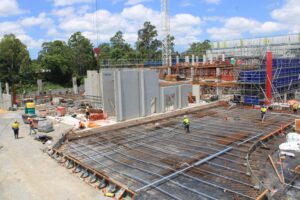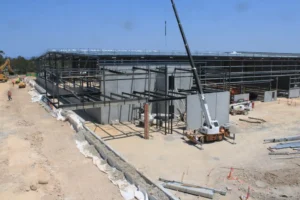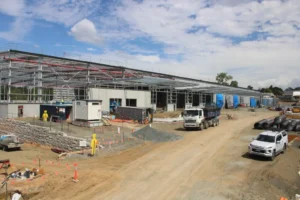
Choosing the right construction time lapse camera position is one of the most important decisions when setting up a long-term construction monitoring project.
A high-quality camera can capture exceptional images, but if it is installed in the wrong location, the view may become obstructed as construction progresses.
For a project lasting 12, 18, 24 months or longer, camera positioning needs to consider not only what the site looks like today, but what it will look like throughout the entire construction program.
Construction Time Lapse Specialists assesses camera locations before installation to provide the best possible long-term view of commercial, civil and infrastructure projects throughout Brisbane and Queensland.
Why Camera Position Is So Important
Construction time-lapse photography works by capturing thousands of images from a consistent viewpoint.
When those images are played sequentially, the viewer sees the project developing within the frame.
The effect works particularly well when the camera:
- remains in the same position;
- maintains consistent framing;
- captures the major construction area;
- has sufficient height;
- avoids unnecessary obstructions; and
- remains secure throughout the project.
Moving the camera unnecessarily can interrupt this visual continuity.
This is why planning the original installation position is so important.
Think About the Finished Building, Not Just the Empty Site
At the beginning of construction, there may be an excellent uninterrupted view across the entire site.
Six months later, the situation can be completely different.
A new structure may block half the camera’s view.
Temporary site sheds could be installed directly in front of it.
A tower crane, scaffolding or stored materials may interfere with the frame.
The camera position should therefore be selected with the future construction layout in mind.
Before installation, it can be useful to consider site plans, building heights and the proposed location of temporary facilities.
Camera Height Can Make a Major Difference
Increasing the camera height can often improve the view substantially.
An elevated position can allow the camera to see over:
- temporary fencing;
- site sheds;
- parked vehicles;
- construction equipment;
- stored materials; and
- other low-level obstructions.
However, simply installing the camera as high as possible isn’t always the answer.
The objective is to achieve the best overall composition while maintaining safe access for installation and future maintenance.
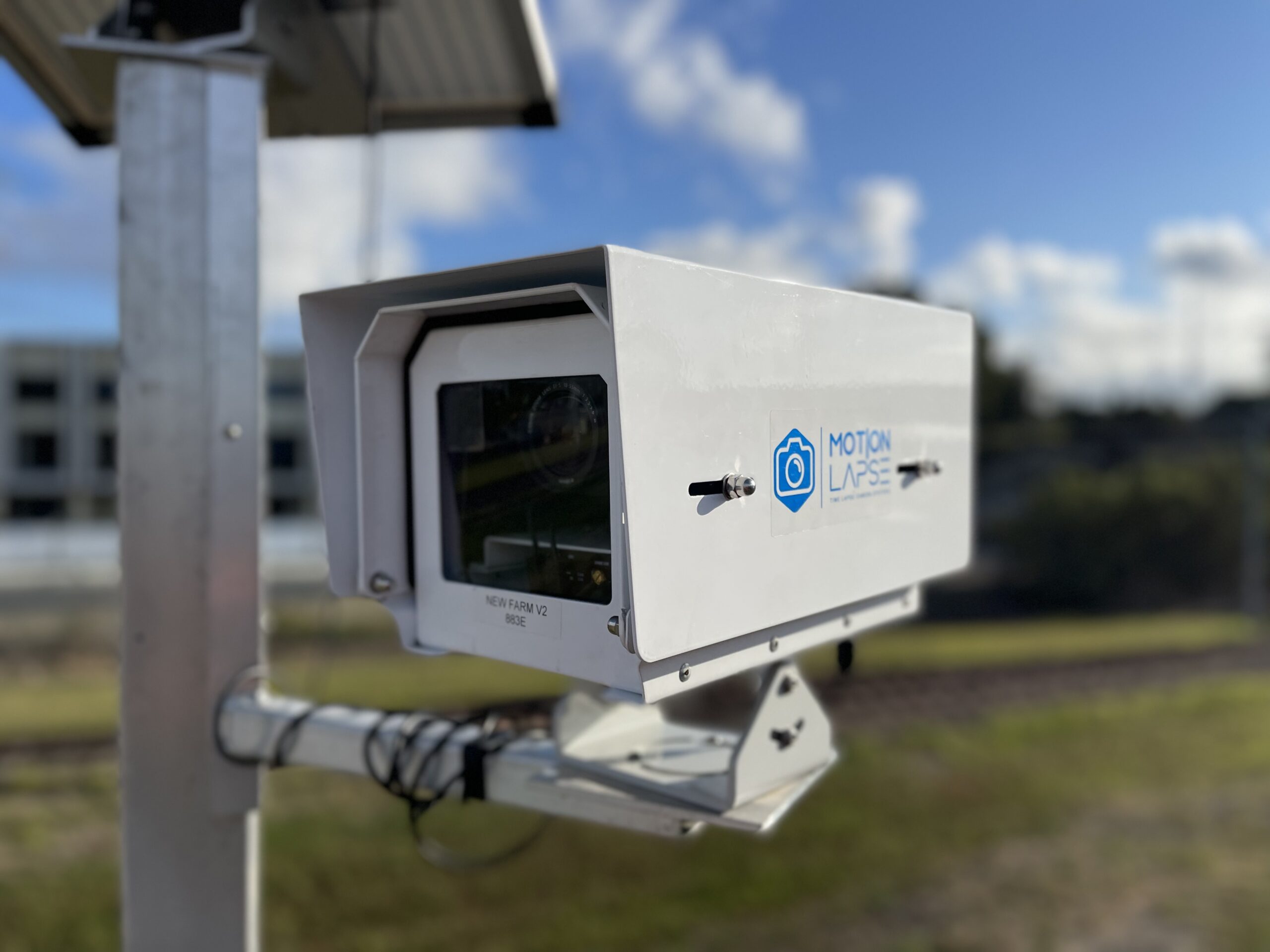
For many projects, a dedicated pole provides an effective solution because it allows the camera to be positioned independently of the building under construction.
Don’t Install the Camera Too Close
A common mistake is positioning a time-lapse camera too close to the construction area.
The view may look impressive during early works, but problems can arise as the building increases in height.
Eventually, part of the structure may disappear outside the camera’s field of view.
Moving the camera further away can provide a more complete perspective.
The ideal position needs to consider the dimensions and eventual height of the completed structure.
Consider the Direction of the Sun
Lighting is another important consideration.
A camera looking directly toward the sun for significant periods can experience glare and difficult exposure conditions.
The position and orientation of the camera should therefore consider how sunlight changes throughout the day and across different seasons.
This is particularly important on long-term projects.
A camera installed during winter may experience very different sun angles six months later during summer.
Professional camera technology can compensate for changing conditions, but good initial positioning remains important.
Use High-Resolution Camera Technology
Once a suitable position has been identified, camera quality becomes the next consideration.
The construction time-lapse systems developed by MotionLapse use high-resolution DSLR technology designed for long-term construction photography.
This provides an important advantage when the camera is installed some distance from the construction area.
High-resolution source images provide greater detail and more flexibility for producing the finished time-lapse.
They can also be useful when project teams need to examine particular areas of an image.
Make Sure the Camera Can See the Main Construction Activity
A good construction time-lapse doesn’t necessarily need to show every square metre of the site.
The priority should be capturing the areas that best communicate the project’s development.
For a commercial building, this may mean framing the primary structure.
For an infrastructure project, the ideal view may need to capture a wider construction corridor.
For particularly large or complex projects, one camera may simply not be enough.
When Should You Use Multiple Cameras?
Multiple cameras can be extremely valuable on larger projects.
Consider a development with several buildings or construction zones.
One camera may provide an excellent view of the first building while completely missing work occurring behind it.
Installing two or more cameras can solve this problem.
For example:
Camera 1: overall project view
Camera 2: secondary construction area
Camera 3: specialised structure or alternative angle
The images can later be combined when creating the final project video.
Fixed Camera Position vs Relocation
Keeping a camera fixed generally provides the best visual continuity.
However, there are situations where relocation is appropriate.
A building may eventually obstruct the original view, or construction may move into an entirely different section of a large site.
In these cases, a planned relocation can be more useful than continuing to photograph an area where the important construction activity is no longer visible.
The key is to treat relocation as a deliberate project stage rather than moving the camera frequently.
Solar Power Gives More Positioning Flexibility
One of the challenges when selecting a camera position is access to electricity.
The best photographic location isn’t always close to mains power.
Solar-powered systems can provide considerably greater flexibility.
A camera can be positioned based on the quality of the construction view rather than simply the location of the nearest power supply.
This is particularly valuable for greenfield developments, civil works and infrastructure projects.
4G/5G Connectivity Reduces Site Infrastructure Requirements
Connectivity also affects camera placement.
Traditional camera systems may require physical network infrastructure.
A remotely connected construction camera can use mobile communications to transmit images from the site.
This means the camera can potentially operate independently of the construction site’s IT network.
Images can then be uploaded automatically for remote access by authorised users.
Check Mobile Coverage
Although 4G/5G connectivity provides significant flexibility, mobile reception should still be considered during installation.
A location with an excellent photographic view but extremely poor network coverage may require a different approach.
This is another reason why professional site assessment is useful before committing to the final installation point.
Make Sure the Camera Is Accessible for Maintenance
Long-term construction cameras are designed to operate independently, but access remains important.
Over a project lasting several years, the system may require inspection or maintenance.
The camera shouldn’t be installed in a position that becomes impossible or unsafe to access once construction progresses.
Future access should therefore be considered at the beginning of the project.
Add Drone Photography to Cover What the Fixed Camera Can’t See
Even a perfectly positioned fixed camera has limitations.
It can only photograph what is visible from its location.
This is where professional drone photography becomes extremely useful.
Droneworxs Aerial Photography can provide scheduled aerial progress photography throughout the construction program.
A drone can photograph areas hidden from the fixed camera and provide an overall view of the entire development.
For example:
Time-lapse camera → consistent daily project view
Drone photography → fortnightly or monthly aerial overview
Together, they provide a much more complete visual history of the project.
Consider the Final Time-Lapse Video From Day One
Camera positioning shouldn’t only be based on project monitoring requirements.
It is also worth thinking about the finished video.
Imagine watching the entire project compressed into two or three minutes.
Will the building remain within the frame?
Will the main construction activities be visible?
Will the final completed project look impressive from the selected position?
Planning with the finished video in mind can significantly improve the final result.
Camera Positioning for Brisbane and Queensland Construction Projects
Every construction site is different.
A camera position that works perfectly for a warehouse development may not work for a high-rise building, bridge, school or motorway project.
Construction Time Lapse Specialists can assess the site and determine a suitable location based on:
- project layout;
- finished building height;
- camera distance;
- available mounting positions;
- access requirements;
- solar exposure;
- communications coverage;
- expected obstructions; and
- the desired final time-lapse composition.
For larger projects, we can also recommend whether multiple cameras or scheduled relocations would provide better coverage.
Get Your Camera Position Right From the Start
A construction time-lapse camera may remain in position for years, capturing thousands of photographs.
Getting the location right at the beginning can make a significant difference to both the usefulness of the images during construction and the quality of the final time-lapse video.
Construction Time Lapse Specialists provides long-term camera installations for commercial, civil and infrastructure projects throughout Brisbane, the Gold Coast and Queensland.
We can assess your project, recommend suitable camera positions and provide a complete visual monitoring solution from installation through to completion.
From the ground to the sky — we capture your entire construction journey.
Contact Construction Time Lapse Specialists before your project starts and we’ll help determine the best camera position for your site.