Key Takeaways
A useful visual monitoring process starts with clear project questions and consistent capture, not simply more cameras. The records work best when teams review them alongside schedules, inspections and site knowledge.
- Choose cameras, drones or other capture methods to suit the site and the decisions teams need to make.
- Set consistent viewpoints and capture intervals so changes can be compared over time.
- Link visual records to milestones, plans and reporting responsibilities.
- Use images to inform discussion, while keeping inspections and professional judgement in the loop.
- Plan for privacy, data security, access and practical site conditions from the outset.
What construction project visual monitoring involves
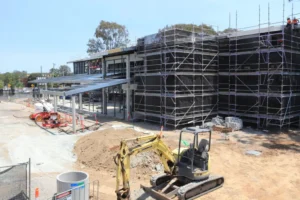
Construction project visual monitoring is the planned capture and review of images or video to understand site conditions and progress. It creates a record that project teams can revisit, rather than relying only on memory or written updates. Its value depends on regular capture, clear organisation and thoughtful interpretation. Visual records support project control; they do not replace site inspections or the judgement of people who know the work.
How visual data captures site conditions and progress
A photograph or video frame records what was visible from a particular position at a particular time. Repeating captures from comparable viewpoints can help teams follow visible changes, check what appears complete and clarify questions about site conditions. Date, location and viewpoint matter: without them, an image may be difficult to compare or interpret later. A consistent visual record is most useful when it is considered alongside the work package, programme and relevant site notes.
How it differs from traditional site reporting
Written reports explain what a team observed and how it interprets that information. Visual records add a direct view of selected site conditions, but they have their own limits: an image may omit activity outside the frame or fail to show what happened between captures. Combining both forms of evidence gives stakeholders context as well as a visible reference. For a broader account of how imagery can support collaboration and progress review, see these visual monitoring benefits.
Which project stages benefit most from visual records
Visual records can be useful from early site establishment through construction and handover, although the questions change as the project moves forward. Early captures can establish context; later records can help teams review visible work against planned milestones or document selected completed areas. At handover, an organised archive may help explain the sequence of visible changes. Each stage needs an agreed purpose, rather than an assumption that collecting more imagery will automatically make a project easier to manage.
Choosing the right monitoring methods
The best capture method depends on the size and shape of the site, the views required and how often teams need to revisit the record. A fixed view can show change over time from one position, while mobile or aerial capture can cover areas that are harder to see from a single viewpoint. Some projects will use more than one method. The aim is to gather information that answers practical project questions without creating an archive nobody has time to review.

Using fixed cameras for continuous site coverage
A fixed camera can provide a repeatable view of a defined area, making it easier to compare conditions across capture dates. Position, lens view, obstructions, power and connectivity all affect whether that view remains useful as the site changes. It is worth checking whether cranes, temporary works or later construction stages may block the chosen angle. Construction Time Lapse Specialists provides construction time-lapse cameras and photography, with 4K cameras, remote monitoring and expert support described in its service information.
Capturing progress with drones and 360-degree cameras
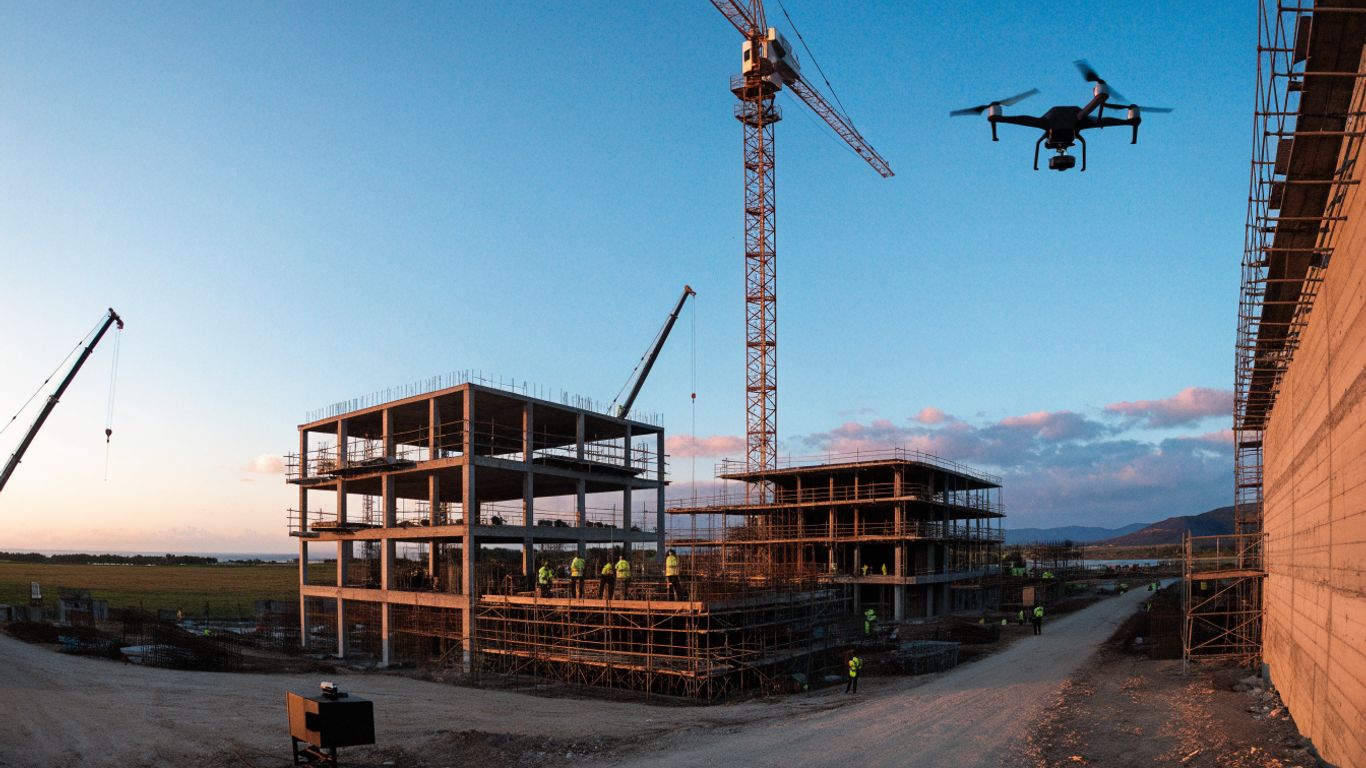
Aerial imagery can show the wider arrangement of a site, while a 360-degree camera can record an immersive view from a particular location. These approaches can complement fixed cameras, especially when teams need to consider areas or perspectives that a single fixed viewpoint cannot cover. Capture planning should account for access, safe operating procedures, consistency and any applicable permissions. Construction Time Lapse Specialists provides drone imaging and high-resolution photography; the capture method should still be matched to the project’s specific review needs.
Combining imagery with BIM and digital twins
Images can be reviewed alongside a model or drawing to help teams discuss what is visible in relation to design information. The records need clear dates, locations and references if people are to compare them meaningfully. Imagery by itself does not establish that work meets a specification, and a model does not remove the need to verify conditions on site. Teams should agree how visual evidence will be connected to their existing project information before investing in a more elaborate workflow.
Building a reliable monitoring workflow
A dependable workflow is designed around the decisions the project team needs to make. It sets out who captures information, where it is stored, how it is labelled and when it will be reviewed. These details can sound administrative, but they determine whether records are comparable and accessible when a question arises. Construction Time Lapse Specialists offers durable systems and secure remote portal access for viewing site progress, as described in its service information.
Setting goals, coverage areas and capture frequency
Start with a small number of practical questions: which areas need a record, what changes matter, and who will use the information? Then define viewpoints and a capture frequency that suit the pace of work and the project’s reporting cycle. A useful plan balances coverage with the effort required to review and manage the material. The table below gives a simple way to turn broad intentions into capture decisions.
| Monitoring goal | Useful coverage | Capture planning question | Review focus |
|---|---|---|---|
| Follow a visible work area | Repeatable fixed viewpoint | How often does the area change? | Compare dated captures |
| Understand site-wide arrangement | Planned aerial view | Which areas need a safe, clear view? | Review access and layout |
| Record selected spaces | Consistent ground-level viewpoints | Who can capture them safely? | Check location and context |
Once these choices are documented, teams can test the plan on site and adjust views that prove obstructed or unhelpful. Guidance on planning visual monitoring also covers capture schedules, image organisation, reviews, communication and privacy. Keep the process proportionate: a reliable set of relevant views is more useful than a large collection without a clear review purpose.
Planning camera locations, access and data ownership
Camera locations should be considered against the changing site layout, safe access and the views required for reporting. The project team should also agree who can view, download or share records, who manages them and how long they are retained. Access arrangements and ownership should be settled before capture begins, not left to individual assumptions. For example, building contractors must be considered in the context of project planning, budgets, quality and safety; clear responsibilities help everyone understand how site information will be used.
Aligning visual records with programme milestones
When capture dates correspond with programme milestones, teams have a clearer basis for reviewing visible work in context. A record should be labelled with a date and location, and linked to the relevant work area or reporting period where practical. This does not make the image a substitute for programme updates or formal verification; it makes the supporting material easier to find. Agreeing the review rhythm in advance also helps avoid a backlog of imagery that arrives after decisions have already been made.
Turning visual records into project insights
An image becomes useful evidence when the team can explain what it shows, when it was captured and why it matters to the project. Comparisons can help focus discussion, but they are not a verdict on their own: perspective, occlusion and capture timing can all affect interpretation. Teams should make space to ask what is missing and verify important observations through the appropriate site process. Organised records can support clearer conversations between people who cannot always be at the same location.

Comparing site conditions with plans and schedules
Compare like with like wherever possible: the same location, a clear date and a defined question make the review more reliable. A photo may help a team discuss the visible state of an area against a drawing or milestone, while the schedule provides the timing context. If the two do not appear to align, record the question and follow it up through the project’s normal review and verification steps. For finish selections, the same need for clear criteria applies in other settings too, such as when people consider Cambria countertops for homes; in a construction review, the relevant acceptance criteria must come from the project’s own specifications.
Tracking progress, delays and emerging risks
Visual comparisons can help teams notice a change, an apparent lack of activity in a view, or a condition that merits follow-up. They cannot, by themselves, establish the cause of a delay or confirm that an area is safe. A clear follow-up process helps turn an observation into an action without treating an image as a complete account. Teams can use a short sequence like this to structure reviews:
- Record the image date, location and relevant work area.
- Describe the visible observation without assuming its cause.
- Check the observation against the programme and other site records.
- Assign a person to verify or respond to the issue.
- Record the outcome and any further review needed.
This approach keeps the distinction between what the image shows and what the team concludes. It is also useful where specialist acceptance requirements apply: wound-care biomaterials, for instance, are assessed against defined clinical considerations, while construction teams should use the criteria relevant to their own work and specifications.
Sharing clear evidence with clients and contractors
A shared visual record is easier to use when it has concise labels, a clear date and a short explanation of why it is being circulated. Select material that answers the question at hand rather than sending a large, unexplained collection. Make clear whether an image is an observation, a comparison or a verified finding, and provide a route for follow-up. Used this way, imagery can support progress reporting and discussion while leaving formal approvals and technical decisions with the people responsible for them.
Selecting tools and evaluating performance
Tool selection should follow the monitoring plan, not drive it. Teams need to weigh image quality, viewpoints, storage, access and the effort required to keep information organised. A simple process that people can sustain may be more valuable than a complex setup that is rarely reviewed. Evaluate both the equipment and the working arrangements around it, including who checks image quality and how records connect to existing project documentation.
Assessing image quality, storage and integration needs
The useful level of detail depends on the question: a broad site view and a close record of a particular work area do not have identical requirements. Consider lighting, image clarity, the intended viewing screen and whether the viewpoint will remain available as work progresses. Storage should be planned around access, retention and the volume of material expected over the project lifecycle. Integration can be as simple as consistent file names and links to reporting records, provided the method is clear and maintained.
Comparing automated analysis with manual review
Automated tools may assist with sorting or comparing visual information, while manual review allows people to apply site context and ask follow-up questions. Neither approach removes the need to check whether an observation is accurate and relevant. Before using automated analysis, teams should understand what the tool is designed to do, what information it uses and how results will be checked. This is a procurement question as well as a technical one; guidance on dental equipment similarly considers clinical fit, compatibility, staff training, maintenance and operating costs.
Measuring value through useful project KPIs
Measures should reflect whether the monitoring process is helping the team make or communicate decisions. For example, a project can review whether planned captures are happening, whether records are available when reporting is due and whether relevant observations receive follow-up. Avoid treating image counts as proof of better project performance. A useful review links a small set of measures to the original goals and considers feedback from people who actually use the records.
Managing safety, privacy and implementation risks
Visual monitoring needs to be planned with the same care as other site processes. Camera views, access rules and retention practices can affect workers and other people, while poor positioning or unreliable connectivity can leave important areas unrecorded. Establish responsibilities early and check arrangements as the site changes. Monitoring supports oversight, but it should not be presented as a replacement for supervision, safe work procedures or on-site inspections.
Protecting workers’ privacy and meeting legal obligations
Before capture begins, identify what areas will be recorded and whether people or neighbouring properties may appear in view. Explain the purpose of monitoring to workers and stakeholders, and seek appropriate advice on applicable privacy and legal obligations. Limit collection to what the project needs, and avoid keeping material without a clear purpose or retention period. Revisit the arrangement when camera positions or site boundaries change.
Securing footage and controlling access
Decide who needs access and what they are permitted to do with the records. Use appropriate access controls, keep sharing limited to the intended audience and make responsibilities for storage and retention explicit. Teams should also understand how they will manage access when roles change or a project reaches completion. A secure remote portal can make records available to authorised stakeholders, but the project still needs clear governance around the information it stores.
Addressing blind spots, connectivity and adoption challenges
A camera may have a clear view at installation and a poor one a few months later. Temporary works, stored materials and new structures can create blind spots, while connectivity or power constraints may interrupt capture. Routine checks help reveal these issues before the records are needed for a review. Adoption matters just as much: agree who will maintain the process, make the review straightforward and ask site teams whether the capture plan fits how work is actually carried out.
Plan your visual coverage
For a project-specific discussion about construction time-lapse cameras, photography and camera installations, contact the team to talk through the coverage and support your site may need.
Conclusion
Construction project visual monitoring is most effective when it is built around clear questions, consistent capture and a practical review process. Choose methods that suit the site, connect imagery to plans and reporting, and manage records responsibly. Used alongside inspections and professional judgement, visual evidence can give project teams a clearer, more dependable view of change over time.