
Introduction: Two Perspectives, One Goal
When it comes to documenting construction progress or promoting a finished build, visuals play a major role. Today, project managers have access to both ground construction photography and drone footage—each offering its own strengths. But how do you know which one is best for your specific project?
In this article, we’ll break down the benefits of both ground and aerial imagery, and help you decide which approach—or combination—is right for your build.
Ground Construction Photography: Detailed, Human-Level Insight
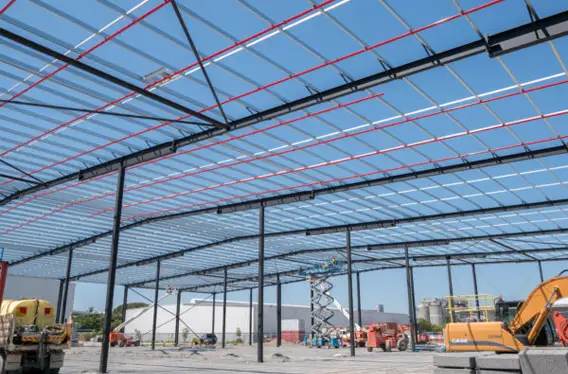
Ground construction photography captures a close-up, eye-level perspective that’s ideal for showing fine details and craftsmanship. This technique in ground construction imagery is particularly effective for:
- Highlighting interior finishes and fit-outs
- Documenting technical installs or compliance stages
- Capturing team members in action
- Providing context for scale and texture
Since these images are taken from the ground, they give a human feel that’s often useful for marketing, reporting, or safety documentation.
Advantages:
- Excellent for showing detail and depth
- Ideal for internal and enclosed spaces, benefitting ground construction photography significantly.
- Provides a relatable, on-the-ground perspective
- Easy to use in reports, portfolios, and site signage
Drone Photography: The Big Picture from Above
Drone photography offers sweeping aerial views of your site—something traditional cameras can’t match. With high-resolution images and video from above, you get a complete overview that’s perfect for tracking large-scale progress or planning logistics.
Aerial imagery excels in scenarios like:
- Site layout documentation
- Progress comparisons over time
- Capturing large or complex builds
- Creating promotional content and flyovers
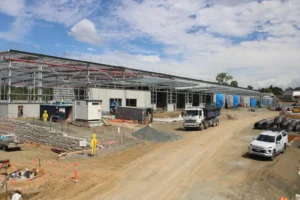
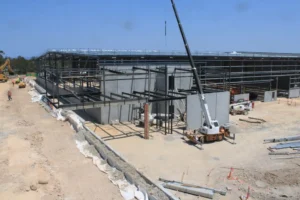
Drones are especially effective for projects with broad footprints, such as infrastructure, civil works, or industrial developments. These projects can benefit significantly from ground construction photography and aerial shots working together.
Advantages:
- Unmatched site coverage in a single shot
- Helps spot layout issues or access challenges
- Valuable for marketing, stakeholder reports, and planning
- Safer inspections of roofs, scaffolding, and high-risk zones
Drone vs Ground Photos: Which Should You Choose?
If you’re deciding between drone vs ground photos, the best option often depends on your project stage, goals, and audience. Here’s a quick guide:
| Use Case | Best Option |
|---|---|
| Showcasing progress on a large site | Drone photography |
| Highlighting detailed workmanship | Ground photography |
| Creating marketing content | A combination of both |
| Monitoring safety and compliance | Ground + drone imagery |
| Capturing internal works | Ground photography |
| Site logistics and planning | Drone photography |
In most cases, combining both ground and aerial photography gives you the most comprehensive visual record. You’ll benefit from both detail and scale—ideal for stakeholder updates, compliance records, and promotional materials.
Conclusion: Capture Every Angle for Maximum Impact
Whether you’re documenting milestones, showcasing your team’s skill, or preparing a project case study, both ground construction photography and drone footage play valuable roles. Choosing the right one—or blending both—ensures you capture every angle, tell the full story, and maximise the visual impact of your project.
Need high-quality visuals for your next build?
Contact Construction Time Lapse Specialists to discuss the best mix of drone and ground photography for your site and ensure comprehensive construction documentation.