
Key Takeaways
Accurate construction progress monitoring depends on consistent evidence, clear measures and timely interpretation. A practical system connects what is observed on site with the programme, cost controls and decisions.
- Define measurable activities, milestones and completion criteria before work begins.
- Combine inspections, photographs, drawings and digital field records.
- Compare actual physical progress with the approved programme and dependencies.
- Report evidence, risks, variations and decisions at a useful frequency.
- Use reliable visual records to improve visibility across the project lifecycle.
What construction progress monitoring involves
Construction progress monitoring is the disciplined process of checking what has been completed, what is underway and what may affect the planned finish. It brings together field observations, programme data, documentation and professional judgement. Done well, it gives project participants a shared view rather than a collection of disconnected updates. The approach should be proportionate to the project’s size, risk and reporting obligations.
The difference between progress tracking and progress reporting
Progress tracking is the ongoing collection and assessment of facts from the site. It asks whether an activity has started, how much of it is complete and whether the work matches the approved sequence. Progress reporting is the communication of that assessment to people who need to act on it. A report may include a snapshot of the tracking data, but it should also explain variance, causes, consequences and next steps.
A useful report therefore does more than repeat a percentage. It makes the evidence behind that percentage visible and identifies where management attention is needed.
Why reliable site data matters to project control
Project controls are only as dependable as the information entering them. If a claimed completion percentage cannot be traced to an inspection, drawing, photograph or other record, schedule and payment decisions become difficult to defend. Reliable site evidence supports better decisions because it gives the team a common reference point when accounts differ.
The quality of the record also matters after the event. Clear, dated documentation can help explain when a change occurred, whether an interface was ready and why a forecast was revised.
The people responsible for monitoring progress
Monitoring is shared across the site and office, although responsibilities should be explicit. Supervisors and subcontractors provide first-hand information about completed work, access, materials and constraints. Project managers and planners test that information against the programme, while commercial teams relate verified progress to valuations and forecasts.
Clients, consultants and government stakeholders may review the evidence independently or rely on agreed reporting. Assigning an owner for each data set prevents the familiar situation where everyone assumes somebody else has checked it.
When monitoring should begin and how often it should occur
Monitoring should begin when the baseline programme, scope and reporting requirements are established, not when the first major structure is visible. Early records capture site establishment, excavation, temporary works and procurement interfaces that can influence later activities. The frequency should follow the project’s pace and risk: daily field notes may be needed on active works, with weekly analysis and monthly reporting for governance.
A construction progress reporting guide can help teams define milestones, reporting frequencies, responsibilities and evidence before the routine becomes difficult to change. The essential point is consistency: a less elaborate record kept reliably is often more useful than an ambitious process that is applied irregularly.
How to establish measurable progress criteria
Progress criteria turn a broad scope into work that can be observed and assessed. They should be agreed with the programme, drawings, specifications and contract rather than invented after a delay appears. The criteria also need to reflect how the work is actually delivered, including hold points, inspections and dependencies. Clear definitions make conversations about completion much less subjective.
Breaking the programme into trackable activities
A programme becomes easier to monitor when activities are small enough to verify but not so fragmented that the record becomes burdensome. A useful activity has a defined location, scope, planned duration and completion condition. For example, a concrete pour might be separated from reinforcement inspection, formwork approval and curing, because each has a different evidence trail.
The right level of detail depends on the work package. If an activity covers several floors, work fronts or trades, a single percentage can conceal uneven progress and emerging access problems.
Setting baselines, milestones and completion targets
The approved baseline is the reference against which actual progress is compared. Milestones should mark meaningful achievements, such as a completed structure, tested service or accepted handover area, rather than arbitrary dates alone. Each target needs a definition of done, including any required inspection, documentation or approval.
When the programme changes, preserve the original baseline and record the approved revision separately. That distinction shows whether the project is late against its original commitment, progressing to a formally revised plan, or both.
Measuring physical progress instead of labour effort
Labour hours and attendance can explain capacity, but they do not prove that the planned work is complete. Physical measures might include installed quantities, accepted areas, tested systems or completed work packages. The measure should be visible and repeatable so that two competent reviewers are likely to reach a similar view.
This principle is also reflected in measuring completed work, which focuses on actual output rather than treating labour presence as a substitute for production. Labour data remains useful, but it should help explain progress rather than define it on its own.
Aligning progress measures with payment claims
Payment claims should be tied to the same measurable work definitions used for monitoring. If a claim uses broad activity percentages while the programme uses quantities or accepted milestones, reconciliation becomes slow and contentious. Agreeing the valuation basis early helps the superintendent, contractor and commercial team work from comparable information.
The evidence may include approved records, photographs, quantity calculations, inspection results and details of stored materials where the contract permits them. A claim should make clear what is complete, what is partially complete and what remains subject to approval.
The most effective methods for collecting site data
No single collection method suits every project or work stage. Site inspections provide context, photographs show conditions, drawings locate the work and remote imagery supplies a repeatable view over time. Combining these sources reduces the risk that an isolated observation is mistaken for the whole project position. The method should also account for safety, access, weather, privacy and record retention.
Site inspections and structured observations
An inspection is most useful when it follows a repeatable route and prompts the observer to check scope, quality, access, materials, safety interfaces and constraints. Notes should identify the location, date, activity and people involved, with clear actions where something needs follow-up. Free-form observations can still be valuable, but structured fields make trends easier to compare.
The observer should record what was seen rather than rely on assumptions about what may have occurred between visits. Where an area could not be inspected, that limitation belongs in the record.
Photographic and video documentation
Photographs work best when they are planned rather than collected randomly. Use consistent viewpoints where possible, add close images for important details and retain dates, locations and relevant descriptions. Video can provide context for movement, access or sequence, while a fixed camera can create a continuous visual record between formal inspections.
Construction Time Lapse Specialists provides visual site documentation through time-lapse cameras, drone footage and photography for uses including monitoring and compliance records. The value of any visual system still depends on sensible placement, suitable coverage and a process for reviewing what it captures.
Drone surveys, 360-degree imagery and reality capture
Aerial and immersive imagery can help teams understand large, changing or difficult-to-access areas. Drone surveys may show earthworks, roof areas, stockpiles and overall site relationships, while 360-degree imagery can support remote review of internal spaces. These methods require appropriate permissions, competent operators and a clear purpose for the data.
They should complement, not replace, ground-level verification. A wide view can reveal the context of a delay, but it may not confirm the finish, installation or test status of a particular component.
Digital forms, drawings and field updates
Digital forms reduce transcription between the field and office when they are designed around the questions people actually need to answer. Linking an observation to a drawing location, work package or photo makes it easier to retrieve later. Offline capability can matter on sites with unreliable connectivity, while controlled versions help prevent outdated drawings from being used as evidence.
A practical collection workflow usually includes:
- a defined inspection route and frequency;
- consistent activity, location and status fields;
- dated photographs linked to the relevant work area;
- an owner and due date for each follow-up action.
After collection, the team should review records for completeness before they feed the report or forecast. That small quality check prevents missing context from becoming a management issue.
How to analyse construction progress accurately
Analysis turns site information into an assessment of project performance. It should distinguish facts from forecasts, planned work from approved change and physical completion from administrative close-out. The most useful analysis is specific enough to guide action without pretending that construction uncertainty can be removed. It also leaves a clear trail back to the evidence.
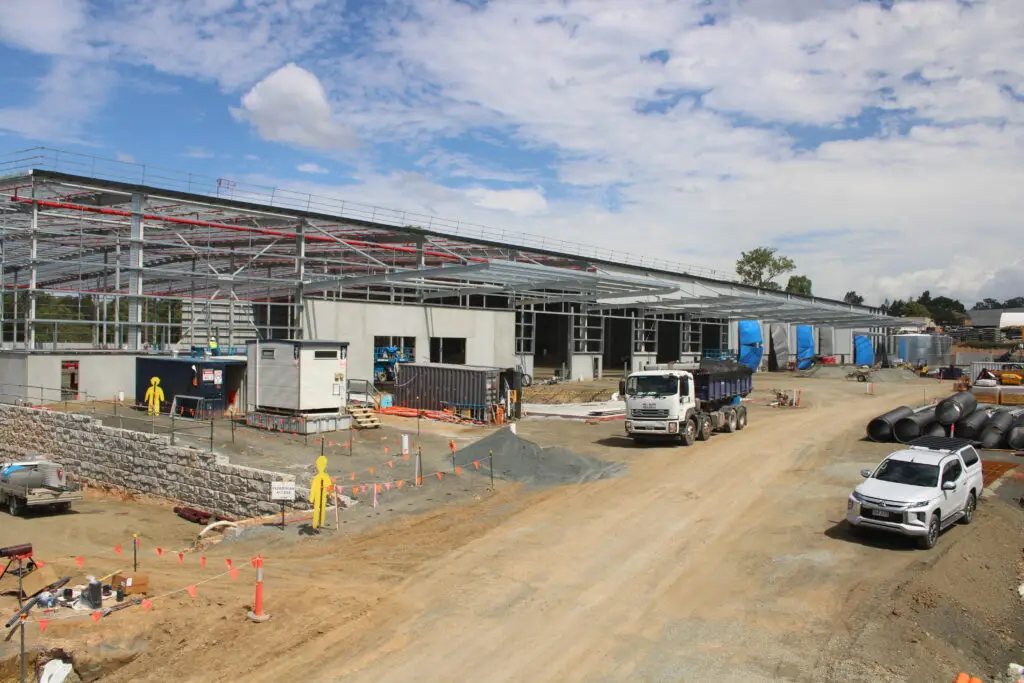
Comparing actual progress with the approved programme
Start by comparing status dates, actual starts, actual finishes and remaining durations with the approved baseline. Review the work by location and trade as well as at project level, because an overall percentage can hide a stalled work front. A variance is more useful when it states the affected activity, the size of the difference and the current forecast.
For major packages, compare both physical progress and the readiness of successor activities. Work that appears nearly complete may still be unable to release the next trade if inspections, access or documentation are outstanding.
Identifying delays, dependencies and critical path impacts
A delay becomes a project control issue when it affects a dependency, float or required completion date. Analyse the cause, the affected relationship and the available response rather than simply labelling an activity late. Common responses may include resequencing, additional access, design clarification or an agreed programme revision, but the appropriate action depends on the facts.
The team should record emerging constraints as soon as they are credible. Waiting for a missed milestone removes options and makes the eventual report less useful.
Using earned value and key performance indicators
Earned value can compare planned value, earned value and actual cost, provided the underlying measurement rules are sound. Other indicators might cover milestone reliability, forecast variance, inspection close-out, rework or the age of unresolved actions. No indicator should be read in isolation: a favourable cost position may reflect delayed work, while a high completion percentage may exclude testing.
Set thresholds that prompt review, and explain the reason for movement rather than presenting a dashboard without interpretation. Infrastructure project monitoring offers a useful framework for comparing baselines while considering schedule, cost, quality and risk together.
Separating completed work from partially completed work
Completed work has met the agreed definition and any required acceptance condition. Partially completed work has measurable progress but still contains outstanding scope, access, testing, defects or approvals. Treating the two as interchangeable inflates the apparent position and can distort both forecasts and payment discussions.
A simple status vocabulary helps: not started, in progress, complete subject to verification, accepted and blocked. Add a short explanation where the status is not self-evident, especially when a photograph shows installation but not commissioning.
How technology improves construction progress monitoring
Technology is most useful when it makes reliable information easier to capture, compare and share. A camera, form or dashboard cannot correct unclear criteria or weak ownership. The selection process should begin with the decisions the project needs to make and work backwards to the data required. Technology should fit the site, not force the site into an unnecessarily complex process.
Choosing construction progress tracking software
Assess software against the project’s programme structure, field conditions, reporting duties and existing systems. Useful questions include whether users can associate evidence with activities and locations, whether records remain searchable, and whether permissions support the project’s governance model. Consider implementation effort as well as features; a tool that is difficult to use will produce gaps.
Where AI or automated analysis is involved, ask how outputs are checked, what source imagery is required and how exceptions are handled. Human review remains important where an automated result influences a contract, forecast or safety decision.
Connecting schedules, drawings and site records
Connected records reduce the time spent matching a photograph to a location or an observation to a programme activity. The connection may be as simple as shared identifiers and disciplined naming, or as integrated as a common project platform. Either way, establish the rules before data accumulates.
Construction Time Lapse Specialists combines 4K cameras, drone imaging and high-resolution photography with secure remote portal access for viewing site progress. Used alongside schedules and field records, a consistent visual source can help stakeholders review conditions without relying only on event-based visits.
Using AI and automated visual analysis
Automated visual analysis can assist with sorting imagery, identifying changes or highlighting areas for review. Its role should be defined narrowly enough that users understand what the output means and what it does not mean. Image quality, camera position, lighting, occlusion and changing site layouts can all affect reliability.
The strongest workflow treats automation as a prompt for informed review. It preserves the underlying images and records the decision made by a competent person, particularly where progress status or compliance may be disputed.
Managing data quality, access and system integration
Data quality needs practical controls: standard naming, time settings, version management, permissions, backups and a clear retention period. Access should reflect the user’s role, with sensitive information shared only where necessary. Integration should be tested with real project records rather than a perfect demonstration dataset.
Teams should also decide who owns the system after installation, how faults are escalated and what happens when connectivity or power is interrupted. These details are less visible than a dashboard, but they determine whether the record remains dependable.
How to produce useful progress reports
A progress report should help its reader understand position, movement and required action quickly. It should combine concise commentary with evidence that can be checked. The format may change between daily, weekly and monthly reporting, but the underlying definitions should remain stable. Consistency makes trends meaningful and reduces arguments about what a percentage represents.
Structuring daily, weekly and monthly reports
Daily reports focus on events, work fronts, resources, constraints and immediate actions. Weekly reports interpret movement against the programme and highlight emerging risks, dependencies and decisions. Monthly reports usually take a wider view of milestones, cost, variations, quality, safety, forecast completion and governance matters.
Each report should state the status date, reporting period, baseline or revision used and the source of the progress assessment. A short executive view can sit above the detail, provided it does not hide material exceptions.
Presenting progress with photographs, dashboards and charts
Visuals should answer a question rather than decorate the page. A dated photograph can confirm a changing work front, a chart can show trend and a dashboard can direct attention to exceptions. Use consistent viewpoints and labels so that readers can compare periods without guessing what has changed.
A visual record is particularly useful when stakeholders cannot visit regularly. Construction Time Lapse Specialists supports project communication with 4K cameras, drone imaging and high-resolution photography, giving teams multiple perspectives for progress documentation. The report should still explain what the image proves and what requires separate verification.
Recording variations, risks and emerging issues
Variations should identify the change, its source, status, likely effect and required decision. Risks need an owner, response and review date, while emerging issues should be recorded before they become formal claims or missed milestones. Link each item to the relevant activity, location or document where practical.
Avoid burying a significant issue in a long narrative. A clear summary followed by evidence gives decision-makers enough context without making them search for the point.
Tailoring reports for clients, contractors and consultants
Different readers need different levels of detail. Clients may want forecast completion, key risks and decisions; contractors may need work-front constraints and actions; consultants may focus on design, quality or approval interfaces. One controlled source can support all three audiences, with the presentation adapted rather than the facts changed.
Agree the distribution list, approval process and response expectations. Reporting becomes part of project control when recipients know what they are being asked to decide and by when.
How to improve monitoring across the project lifecycle
A monitoring process should mature with the project rather than disappear after early works. Camera positions, inspection routes, work packages and reporting needs may change as the site develops. Periodic review keeps the system relevant and avoids collecting information that no longer supports a decision. It also protects the value of the project record at handover and close-out.
Creating a consistent site monitoring workflow
Map the workflow from planned activity to field observation, verification, analysis, reporting and action close-out. Define who initiates each step, where evidence is stored and what happens when information is incomplete. A short procedure with clear ownership is easier to follow than a lengthy manual that nobody opens.
Review the workflow at key phases, such as excavation, structure, services, finishes and commissioning. The risks and useful evidence will change with each phase.
Training teams to capture reliable information
Training should explain why the record matters, not only which buttons to press. Show examples of useful and weak photographs, clear location descriptions, partial completion and unresolved constraints. Supervisors and subcontractors should understand how their field updates flow into planning, commercial review and client communication.
Refresher training is worthwhile when the site layout, system or project phase changes. New team members should receive the same basic expectations so that quality does not depend on individual habits.
Auditing records and resolving conflicting data
A periodic audit can check whether records are dated, located, linked to the right activity and consistent with the programme. When a photograph, inspection note and claim disagree, preserve each source and investigate the difference rather than overwriting one record. Record the resolution and, where needed, update the process that allowed the conflict.
Independent review can be useful for higher-risk packages or disputed progress. The aim is not to create more paperwork, but to make the project’s position more defensible.
Turning monitoring insights into faster project decisions
Monitoring only creates value when it changes what the team does. Establish escalation thresholds for delay, access, quality, safety and approval issues, then give the responsible person authority to respond. Meetings should begin with the most material variances and finish with named actions, dates and owners.
For projects that need a repeatable visual record across changing conditions, teams can plan your coverage around the key work fronts and reporting moments. The result is a monitoring rhythm that supports decisions while work can still be influenced, rather than a historical record assembled after the opportunity has passed.
Conclusion
Construction progress monitoring is most effective when measurable criteria, reliable site evidence and clear reporting work together. By comparing physical progress with an approved programme, separating complete from partial work and acting on emerging constraints, project teams can improve visibility and make more timely decisions without losing the practical judgement that construction requires.